Intermediate Level 2
You already understand how individual options behave. Now it’s time to learn how to combine them.
At Intermediate Level 2, you will dive deeper into the structure and logic of options strategies. This is an important transition: from understanding individual options to understanding the architecture of an options strategy. Step by step, you will begin to see not just the individual components, but how they can work together as a complete position.
To get started, you only need to complete 3 steps.
Step 1. Create Your Personal Account.
If you haven’t registered with Risk Academy yet, start by creating an account. Once you register, you’ll have access to your personal dashboard — this is where your training will take place.
After logging in, look for the red indicator on your profile. It means that your email address has not yet been verified.

Once your email is verified, the red indicator will disappear and your personal account will be fully activated. To receive the verification email, go to My Courses and click Get verification email.
If you registered through Sign Up with Google, no additional email verification is required — your email has already been verified by Google.
Step 2. Choose Your Course and Schedule
Go to the Intermediate Level 2 course card. The course includes three 1.5-hour sessions designed to guide you step by step through the material at this level. The full course fee is USD 350.
In this course, you will begin exploring basic stock option combinations, including diagonal and vertical spreads. You will learn how different strike prices and expiration dates interact within a single combination and how changes in its structure affect risk and potential outcomes.
Through practical examples, you will learn how to evaluate the key characteristics of an options combination before entering a position — including maximum potential profit, maximum potential loss, and the breakeven point — and begin exploring more complex structures, such as the butterfly spread.
Diagonal spreads and multi-leg option structures
Right on this page, click Choose Schedule to view the available schedule. Select the date and time that work best for you.
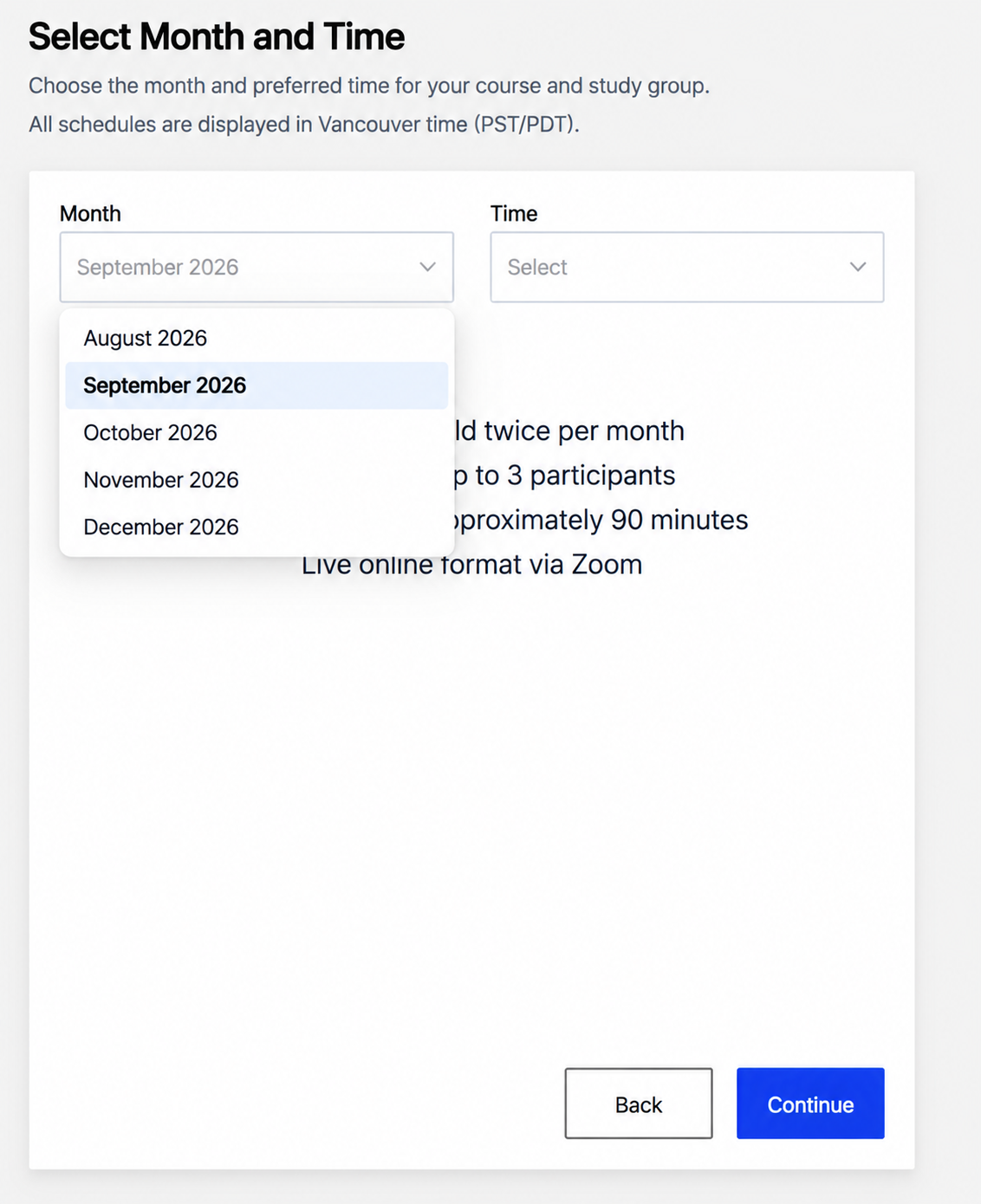
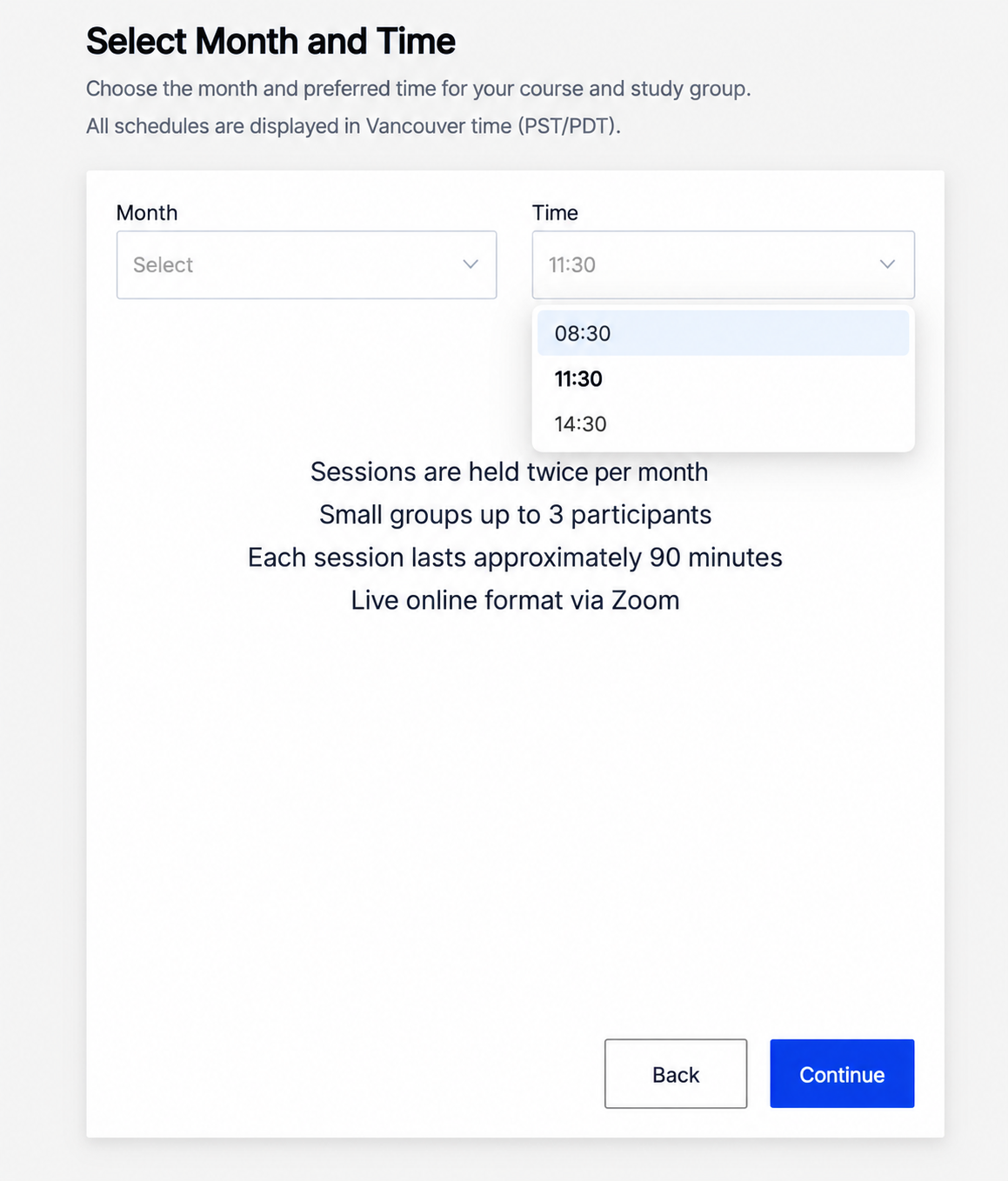
We have designed the schedule to be as flexible and convenient as possible. Intermediate Level 2 is offered twice a month, with three available time options for each course. Choose the date and time that work best for you.
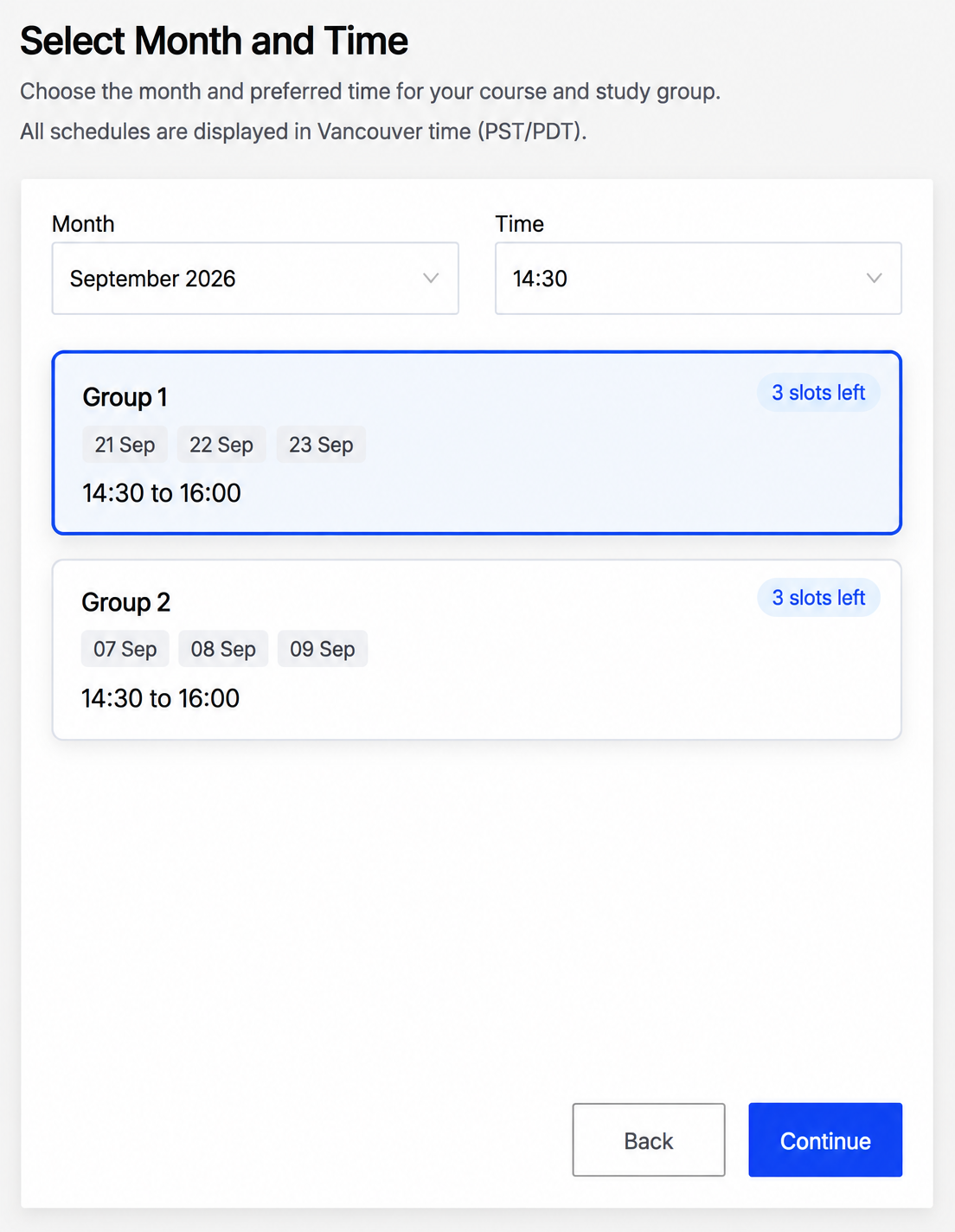
After selecting your preferred date and time, choose one of the two available groups. Each group is limited to no more than 3 participants, so space is limited.
If there is an available spot in your selected group, click Continue. Your spot will be reserved, and you will proceed to course payment.
Please click Continue only when you are ready to proceed with payment, as your spot in the selected group will be reserved for you once you continue.
Step 3. Start Your Training
After completing your payment, log in to your personal account and open the My Courses section. The course card for your selected course will appear there.
Click on the course card to access your sessions, schedule, and online classes.

Clicking on the course card will take you directly to the page for your online Zoom sessions.
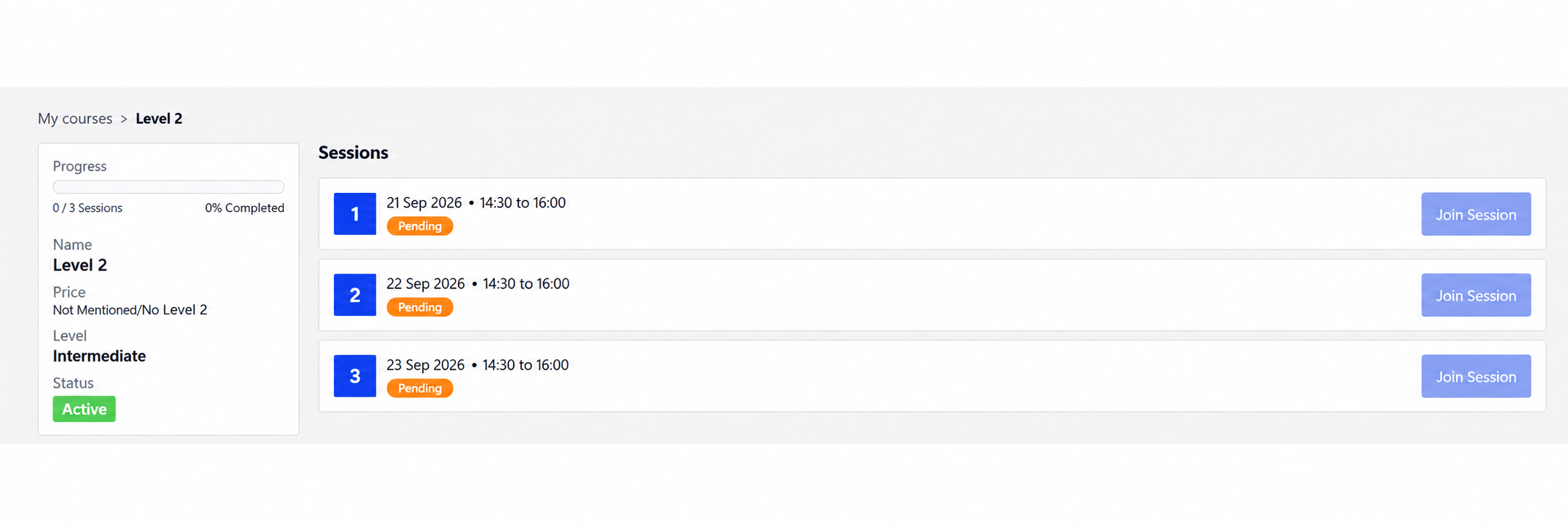
On the date and time you selected, your instructor will start the Zoom session. The Join Session button will then become active, allowing you to join your group.
Each training session is recorded and saved in your personal account. You can return to the recording at any time to review the material or revisit specific topics covered during the session.
Access to your sessions will become active once your course payment is confirmed and the Pending status is updated.
Risk Academy training is built on sharing the experience we have gained over more than 25 years in the financial markets. At this level, you begin to see options not as individual instruments, but as building blocks that can be combined into structures with different risk profiles and potential outcomes.
You are taking an important step forward — from understanding how individual options behave to understanding the logic behind option combinations. By working with different strikes and expiration dates, you begin to see how each element affects the structure as a whole and shapes its behavior.
This is where basic combinations become the foundation for more advanced strategies. Your next step is to explore how more complex structures are built, analyzed, and managed as market conditions change.